

Business Operation · 2025
In this section22 topics
- Corporate Information4 items
- Dividend Policy2 items
- Major Shareholders2 items
- Business Strategies Overview5 items
- Material Changes & Developments2 items
- Use of Proceeds from Securities Offerings1 item
- Commitments Made in the Registration Statement1 item
- Group Operating-Structure Policy1 item
- Shareholders with Potential Conflict of Interest1 item
- Relationships Among Major Shareholders1 item
- Shareholders' Agreement1 item
- Shareholding Diagram (Group Structure)1 item
- Income Structure3 items
- Product / Service Characteristics3 items
- Research & Development6 items
- Assets Used in the Business5 items
- Marketing Policy & Competition5 items
- Procurement of Products & Services8 items
- Nature of Business — Overview1 item
- Projects Under Construction1 item
- Debentures & Bills of Exchange1 item
- Convertible Securities1 item
Corporate Information
Company Name
YUASA BATTERY (THAILAND) PUBLIC COMPANY LIMITED
Telephone
0-2769-7300
Website
www.yuasathai.com
company_secretary@yuasathai.com
Dividend Policy
Dividend Policy
The Company has a policy to pay the dividend not lower than 40% of the net profits after corporate income tax, legal reserve and other reserves of the financial statements of company.
However, such dividend payment is subjected to change. It depends on the operating results, financial liquidity, economic conditions and the necessity to allocate them as working capital for business management and future business expansion. The resolution of the Board of Directors approving the payment of dividends must be presented for approval at the shareholders' meeting unless it is an interim dividend payment that the Board of Directors can approve the payment of interim dividends and report later to the shareholders' meeting.
Historical Dividend Payments
| This Year | Last Year | 2 Years Ago | 3 Years Ago | 4 Years Ago | Metric | Description |
|---|---|---|---|---|---|---|
| 2.26 | 1.6 | 1.14 | 1.02 | 0.91 | Net profit per share (Baht : Share) | Net profit per share (baht : share) |
| 0.9 | 0.61 | 0.41 | 0.35 | 0.29 | Dividend per share (Baht : Share) | Dividend per share (baht : share) |
| 0 | 0 | 0 | Dividend stock ratio (Number of original shares: dividend shares) | Ratio of stock dividend payment (existing share : stock dividend) | ||
| 0 | 0 | 0 | 0 | 0 | Dividend share value per share (Baht : Share) | Value of stock dividend per share (baht : share) |
| 0.9 | 0.61 | 0.41 | 0.35 | 0.29 | Total dividend payment value (Baht : Share) | Total dividend payment (baht : share) |
| 40 | 38 | 36.04 | 34.04 | 32.06 | Dividend payout ratio to net profit (%) | Dividend payout ratio compared to net profit (%) |
Business Strategies Overview
Chairman's Message
The past year was shaped by ongoing global uncertainty, cost pressures, and rising expectations from customers, regulators, and investors. We have encountered many challenges and changes – yet we accepted them while finding solutions to address the difficulties. In this context, our company remained focused on disciplined execution and long-term value creation. I am pleased to report that in 2025 we delivered solid performance on two strategic priorities: profitability and sustainability.
Strong Financial Performance Through Manufacturing and Sales Excellence
From a financial perspective, our performance in 2025 reflected the resilience and efficiency of our manufacturing and sales operations. We achieved improved profitability through enhanced product offering, productivity gains, and effective cost and resource management. Key drivers included continuous improvement initiatives across our factory, renewal of maintenance-free automotive battery lineup, investments in automation and digital manufacturing systems, improved yield and quality control, and tighter energy and raw material optimization. These actions strengthened margins, supported stable cash flow generation, and reinforced our balance sheet, providing a solid foundation for future investment and growth.
Sustainability Progress and External Recognition
In parallel with financial performance, we made important progress in embedding sustainability into our manufacturing operations and corporate governance. In 2025, our company was included in the SET Sustainability Rating for the first time, marking a significant milestone in our sustainability journey. This recognition reflects the progress we have made in strengthening environmental management, workplace safety, social responsibility, and governance practices across the organization. Operationally, we continued to focus on improving energy efficiency, reducing emissions intensity, minimizing waste, and enhancing responsible sourcing within our supply chain. We also reinforced our commitment to employee safety, skills development, and ethical business conduct, recognizing that sustainable manufacturing depends on strong people and strong processes.
Enhancing Transparency and Alignment with Global Standards
Looking ahead, we remain committed to improving transparency and aligning our disclosures with internationally recognized standards. As part of this commitment, the Company will transition to the FTSE Russell ESG Scores framework for public sustainability disclosure starting in 2026. This transition represents an important step in strengthening the consistency, comparability, and credibility of our ESG reporting for investors and stakeholders. It will also support continuous improvement by benchmarking our performance against global peers and best practices.
Profitability and Sustainability: A Reinforcing Strategy
Our experience continues to demonstrate that profitability and sustainability are mutually reinforcing. Efficiency improvements reduce costs and environmental impact. Strong governance and responsible practices enhance operational stability and stakeholder trust. Together, these factors contribute to a more resilient and competitive manufacturing business.
Looking Forward
As we move into the coming years, we will remain focused on disciplined growth, operational excellence, and responsible manufacturing. We will continue investing in modern production capabilities, advancing our sustainability performance aiming for the next milestone, and adapting proactively to evolving market and regulatory expectations. I would like to thank our employees for their dedication, our customers and partners for their trust, and our shareholders for their continued support. Together, we are building a manufacturing company that delivers strong financial performance today, while creating sustainable value for the future.
Vision
“We shall become a leader of battery manufacturers in terms of world-class quality technology.”
Objectives
a) To sustainably make reasonable profit
b) To increase customer satisfaction through innovations and services
c) To continually improve in safety, health and environmental aspects
d) To enhance employee skills and encourage positive attitudes towards work to strengthen the organization
e) To primarily focus on Corporate Social Responsibilities (CSR) for employees, local community, and the society
f) To operate the business according to corporate governance and anti-corruption principles
Goals
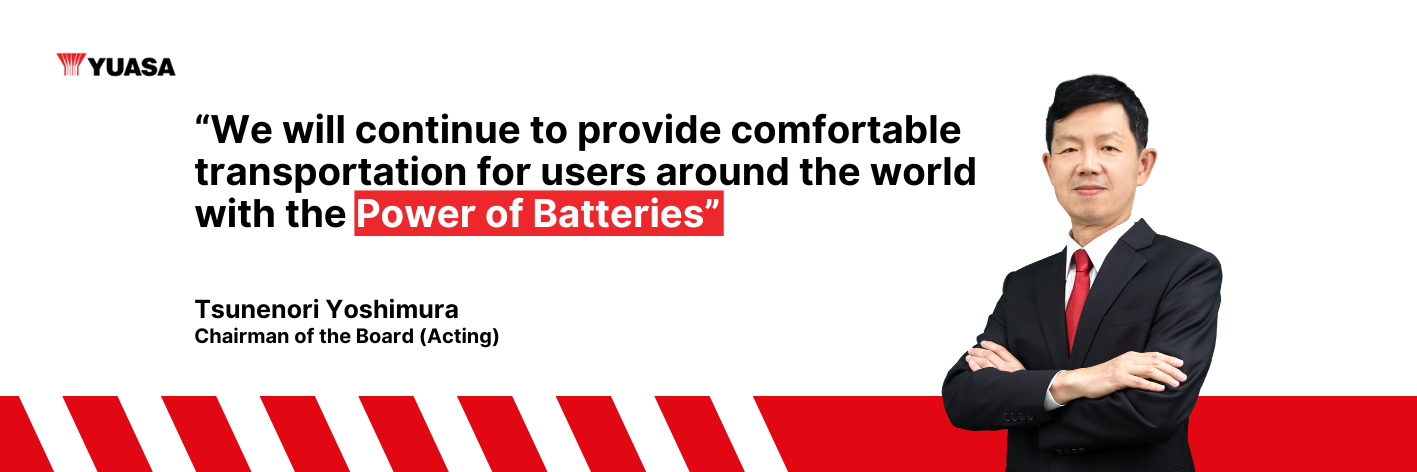
“To be a truly "global minded" people and organization, and continue to provide comfortable transportation to users around the world with the power of batteries”
Business Strategies
The Company has determined three major strategies in order to achieve the business target and objective namely
Customers: Listen to customer feedback to continuously improve the Company’s products and services.
Company: Focus on teamwork, streamlined processes, and profitability.
Competition: Leverage resources from the GS-Yuasa Group and maintain the superior quality of the Company’s products.
Material Changes & Developments
Introduction
The Company had undergone significant changes and development throughout 2023–2025 as follows: -
Material Changes & Developments
| Year | Description |
|---|---|
| 2,023 | On November 9, 2023, the Board of Directors passed the resolution to approve the 41.62-million-baht investment in the motorcycle battery production line - YT Line 4 improvement project for cost efficiency and safety in production and the 21.00-million-baht investment in the Enterprise Resource Planning (ERP) system for improvement of operational efficiency. The ERP project is scheduled to start implementation in early 2024. As for the solar cells installation on the factory’s rooftop totally 7 buildings, the installation has been completed in December 2023, and operation has commenced in 2024. |
| 2,024 | Mr. Tsunenori Yoshimura was appointed as the Chief Executive Officer by resolution of the board of directors on April 9, 2024. Mr. Yoshimura has carried on the policy from the former CEO, Mr. Akira Kiyomizu, who assumed the position in 2020. Regarding investment projects in 2024, improvement of YT Line 4 motorcycle battery production line in term of automation in manufacturing process with the investment amount of 41.62 million baht and the additional installation of solar panels at the wastewater treatment plant with capacity of 43.1 kW and investment amount of 1.80 million baht have been completed in the third quarter. In addition, in the year 2024 the Company has started implementation of the Enterprise Resource Planning (ERP) system. The three investment projects are supported by the Board of Investment (BOI)'s incentives. |
| 2,025 | In 2025, the Company revamped its automotive battery product line to better respond to shifting market demands and enhance customer satisfaction, with a product launch activity held in April 2025. Regarding operational efficiency and cost management, the Company implemented a procurement project for an Auto Cutting and Brushing machine for the automotive battery production process, which is expected to be completed in early 2026. Furthermore, the Enterprise Resource Planning (ERP) system was officially launched on January 1, 2026. In terms of factory control systems, the Company has introduced SCADA (Supervisory Control and Data Acquisition) for real-time monitoring, control, and data analysis within the production process, with the system implementation plan scheduled from the year 2025 to 2027. |
Use of Proceeds from Securities Offerings
Is There Money Raised from a Securities Offering Still to Report On?
No
Commitments Made in the Registration Statement
Are There Commitments or Conditions from an Offering or Listing?
No
Group Operating-Structure Policy
Description
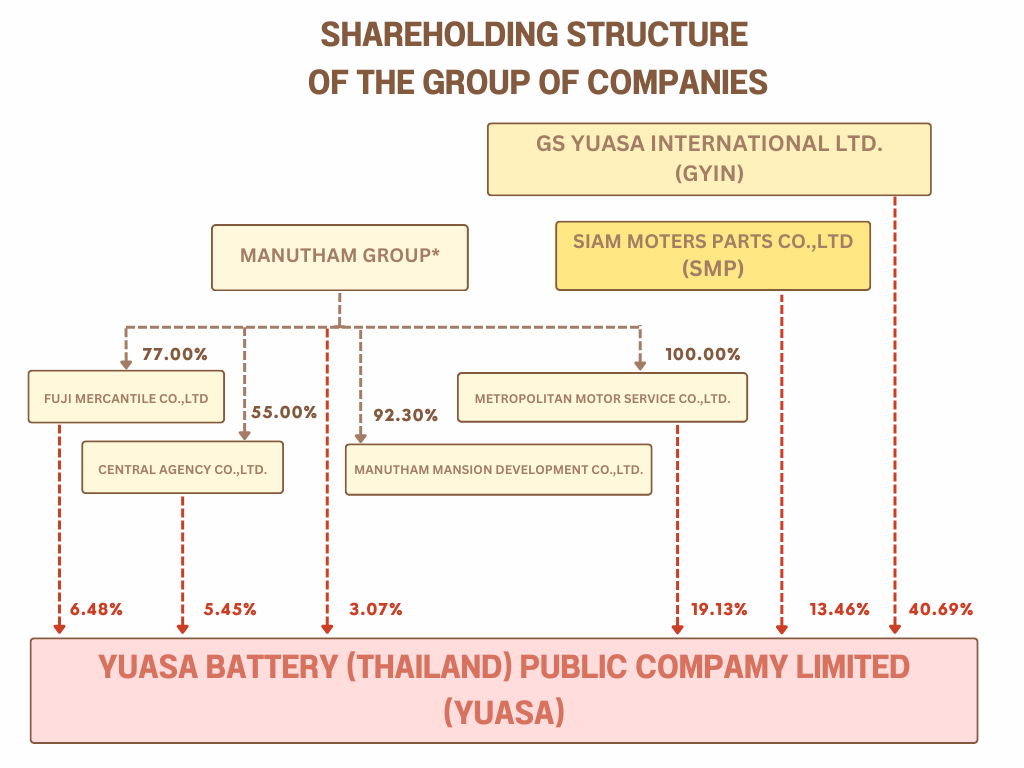
GS Yuasa International Co., Ltd. (GYIN) which is a subsidiary of GS Yuasa Corporation, Japan holds 40.69% of shares in the Company and provide support in the form of technology transfer. The shareholding structure of the Company as of March 2, 2026, is illustrated in the following diagram.
Income Structure
Product / Service Income
| Category | Description | This Year | This Year % | Last Year | Last Year % | 2 Years Ago | 2 Years Ago % |
|---|---|---|---|---|---|---|---|
| Total revenue from operations | Total revenue from operations | 2,878,094.84 | 100 | 2,890,105.96 | 100 | 2,662,103.24 | 100 |
| Automotive Battery | 1,185,479.79 | 41.19 | 1,198,618.57 | 41.47 | 1,127,624.88 | 42.36 | |
| Motorcycle Battery | 1,626,030.14 | 56.5 | 1,620,839.84 | 56.08 | 1,442,409.65 | 54.18 | |
| Other | Others | 66,584.92 | 2.31 | 70,647.55 | 2.44 | 92,068.71 | 3.46 |
Export Income
| Category | Description | This Year | This Year % | Last Year | Last Year % | 2 Years Ago | 2 Years Ago % |
|---|---|---|---|---|---|---|---|
| Total revenue | Total revenue | 2,878,094.84 | 100 | 2,890,105.96 | 100 | 2,662,103.24 | 100 |
| Domestic | Domestic | 2,316,390.5 | 80.48 | 2,274,242.74 | 78.69 | 2,106,515.09 | 79.13 |
| International | International | 561,704.34 | 19.52 | 615,863.22 | 21.31 | 555,588.15 | 20.87 |
Other Income
| Operating Other Income | Non-Operating Other Income | Share of Profit |
|---|---|---|
| 1710 · As of year: 14310.57 · Description: Total other income · As of yesteryear: 5798.84 · As of year before yesteryear: 7462.9 · 1711 · As of year: 9557.29 · Description: Other income from operations · As of yesteryear: 6952.1 · As of year before yesteryear: 6389.54 | 1712 · As of year: 4753.28 · Description: Other income not from operations · As of yesteryear: -1153.26 · As of year before yesteryear: 1073.36 | 1713 · As of year: 0.0 · Description: Share of profit · As of yesteryear: 0.0 · As of year before yesteryear: 0.0 |
Product / Service Characteristics
Introduction
The Company’s major products are classified into 3 main categories based on their usage, namely:
Business Type
3114
Business Groups
| Business Group | Description |
|---|---|
| Conventional Type | Conventional batteries are batteries that must be regularly maintained by adding distilled water to prolong their lifetime. The production techniques and materials used cause a high rate of water evaporation, especially in countries with hot climates such as Thailand. Traffic congestions also raise the temperature in the engine compartment, resulting in high-rate evaporation of electrolyte solution in a battery. Therefore, it is necessary to add distilled water regularly to prolong its lifetime. • Automotive Batteries are currently manufactured under trademarks, such as “YUASA,” “THUNDERLITE” and “YUCON.” • Motorcycle Batteries are currently manufactured under trademarks, such as “YUASA,” “THUNDERLITE,” “YUCON,” “I-RACER,” and “Y-SPEED.” |
| Maintenance Free | Maintenance-Free Batteries are batteries that do not require distilled water added throughout their lifetime because the structure of raw materials and production processes are different from the above conventional battery, causing the very-low level of water loss and the very-low level rate of discharge. Therefore, they are suitable for long-term usage, which is better than conventional batteries. Maintenance-free batteries are divided as follows: - • Automotive Batteries, Wet Charge Type is designed to use a separator and special elemental plates as well as the refinement in the production process. The batteries are ready for use immediately after leaving the factory. Therefore, they have longer lifetime than the same type of general batteries available in the market. • Motorcycle Batteries are designed to be suitable for the usage in motorcycles with features that can be installed in any position without the leakage of the electrolyze solution because the structure is sealed all around. Currently, this type of batteries is produced under the trademark “YUASA.” The two aforementioned types of batteries are produced in the Company’s factories. The Company has manufactured batteries in compliance with the requirements of the Japanese Industrial Standard (JIS) and the German standard or Deutsches Institut Fur Normung (DIN). In addition, the Company is certified with ISO9001:2015, ISO 14001:2015 and ISO45001:2018, which are worldwide standards. Therefore, the batteries from the Company can be used in both hot and cold climates. In addition, the two types of batteries produced by the company can also be classified based on the materials used to make the battery case as follows: • Hard Rubber Container batteries: The container is solid black in color and cannot be seen through. The container is made of natural or artificial rubber. This type of container was used in the early manufacturing era. At present, this type of container is used in batteries for boats and agricultural machinery as the production is costly and the batteries themselves are heavy. • Polypropylene Container (PP): The natural color of this container type is cloudy white and can be seen through. It is highly flexible and softer than hard rubber case. At present, it is mainly used in the manufacturing of batteries for automobiles and motorcycles as the manufacturing cost is lower and the weight is lighter than those with hard rubber container. |
| Traction Battery | Traction Batteries Lifetime of this type of batteries is in the form of usage cycles. The batteries are resistant against deep discharge. They are equipped in electric forklifts, golf carts and solar panels. |
Research & Development
Has R&D Policy (Y/N)
No
R&D Cost — Description
The Company is committed to operating business with the utilization of innovations and technologies in enhancing effectiveness in business operations, leading to the new business development. A designated business unit - Technical Development Department - has been established with the objective to research and develop new products, improve efficiency and resource utilization of manufacturing process, thereby reinforcing business competitiveness. The research and development cost in 2025 amounted to 18.38 million baht which includes development of new model of batteries including design and development for the renewed product line, process improvement such as to reduce use of resource in manufacturing process, development relating to tools and equipment such as 3D print and data logger, and technical development concerning parts and chemicals in production.
R&D Cost — Label
Research and development (R&D) expenses over the past 3 years (Million Baht)
R&D Cost — This Year
18.38
R&D Cost — Last Year
20.08
R&D Cost — 2 Years Ago
10.26
Assets Used in the Business
Permanent Assets — Description
Core permanent assets used in the Company's business consisted of 2 main parts which are a) Land, buildings and equipment and b) Investment Properties-Land and Buildings. Details of important assets with book value/ appraised value (in thousand baht) are as follows: -
Permanent Assets — Appraisal
| Asset | Ownership | Obligation | Appraisal Value |
|---|---|---|---|
| Land | Ownership | Unencumbered | 27,789.79 |
| Buildings and structures | Ownership | Unencumbered | 128,258.48 |
| Machines and tools | Ownership | Unencumbered | 277,501.77 |
| Office tools and equipment | Ownership | Unencumbered | 12,426.56 |
| Vehicles | Ownership | Unencumbered | 4,317.61 |
| Properties under construction | Ownership | Unencumbered | 716.85 |
| Machine under installation | Ownership | Unencumbered | 16,101.46 |
| Investment Properties-Land and Buildings | Ownership | Unencumbered | 2,320.91 |
Intangible Assets — Description
Core intangible assets used in the Company's business is computer software - the asset details with the book value/ appraised value in thousand baht are as follows: -
Intangible Assets — Appraisal
| Asset | Type | Appraisal Value |
|---|---|---|
| Computer software | Software | 26,769.97 |
Has Subsidiaries Investment Policy (Y/N)
No
Marketing Policy & Competition
Introduction
The characteristics of Thailand’s battery markets are classified into 2 categories, which are:
a) Domestic Market consists of the original equipment market (OEM) and the replacement equipment market (REM).
(1) The Original Equipment Market (OEM) involves selling of batteries to automobile and motorcycle assembly factories, such as those of Honda, Hino, Isuzu, Toyota, and Suzuki. Most of these operations are joint ventures with Japanese automobile and motorcycle manufacturers, with procurement managed according to the policies of the joint venture in Japan, relying on the close relationships between the management teams.
(2) The Replacement Equipment Market (REM) involves selling batteries to general vehicle users (end users) for both automobiles and motorcycles through nationwide distributors and dealers.
b) Export Market
In the early stages of the battery industry, local manufacturers produced batteries as substitutes for imports. Once domestic demand had been sufficiently met, battery production shifted to exports. Key importers of Thai batteries include countries in Southeast Asia and the Middle East.
Reporting Mode
3117
Marketing Policy (Overall)
Marketing strategies: The Company has established strategies for sales of the products as follows: -
a) Domestic and international sales: In terms of revenue from sales of automotive and motorcycle batteries in 2025, domestic sales revenue accounted for 80.02% while international sales accounted for 19.98% of the total battery sales revenue. Revenue from both domestic and international sales decreased from 2024 approximately 0.28% due to several factors such as the growth of Thai economy, acquisition of new distributors, project sales, and the economic stimulus package of the government in the beginning of the year.
b) Domestic distribution and sales territories: Distribution comprises of direct distribution to OEM customers, which are automobile and motorcycle manufacturing companies; and distribution to customers in the replacement market through the dealers and distributors.
In terms of distribution to OEM customers, pricing is still a bargaining because it involves sales in big, continual lots. REM and MTD pricing are defined by the Company.
In 2025, sales to OEM customers totaled 667.13 million baht, accounting for 29.65% of total domestic battery sales. This represents a 2.42% decrease compared to 2024, primarily due to strategic shifts in automotive battery sales to manufacturers. Conversely, sales to domestic motorcycle manufacturers saw a slight increase from the previous year.
Total domestic battery sales reached 2,249.81 million baht, representing a 2.10% increase compared to 2024. This growth was primarily driven by the automotive battery product line revamp implemented in 2025. Furthermore, the Company has actively expanded the sales of automotive and motorcycle batteries into new marketing channels, coupled with sales promotion initiatives aimed at stimulating increased purchasing demand.
c) Product quality: The Company produces high-quality products by applying technology transferred from GYIN, Japan. Raw material and product inspections are implemented in every step of production through the Acceptance Sampling Techniques. The Company was certified by many institutions — JIS, DIN, etc. It was also certified with the globally-accepted standards of ISO9001, ISO14001 and ISO45001. Furthermore, the Company is the leader in production with the assistance of cutting-edge technologies, such as sealed maintenance-free batteries. Most of the customers agree that the Company’s products are of high-quality.
d) Pricing policy: Pricing is usually based on the trademark of each battery product to be manufactured. The “YUASA” brand is positioned as a premium brand with higher selling prices. For “THUNDERLITE” and “YUCON,” prices of these two brands are moderate and lower than that of “YUASA,” thus the pricing strategy will not ruin the image of the “YUASA” brand.
In terms of wholesale pricing, the Company implements the tiered pricing model as a nationwide standard. The tiered pricing is also implemented in international markets as an established international standard.
e) Good relationship with major automakers and motorcycle makers: With a long history of automotive and motorcycle battery sales and the Company’s long-lasting good relationship with automakers and motorcycle makers; while GS Yuasa Corporation, Japan — the parent company of GYIN — who is the Company’s major shareholder, has had good relationship with Japanese automakers, the product development collaboration with the automakers was formed; for example, the manufacturing of a special maintenance-free motorcycle battery model for 4-stroke Honda motorcycles. This kind of development is advantageous as it allows the Company to grab market shares from sales revenue of that motorcycle model.
f) Sales promotions: The Company offers a variety of sales promotions depending on the characteristics of each market
(1) Discounts for dealers who make purchase order per quantity and condition
(2) Offering of premium goods to customers that meet the criteria
(3) Point collection program to redeem for rewards per condition
(4) Advertisement and public relations activities through media – online and offline
(5) Collaboration with customers to offer battery inspections to end users
The Company offers sales promotions with T-shirts or premium goods giveaway and point collection program to redeem for rewards. In terms of the REM market, there are travel programs for customers whose sales achieve the target.
The Company also runs advertisements through television, print media and other media, aiming at boosting consumer demand. Pull marketing is implemented in the REM market and the Company is responsible for conducting the strategy on its own. The budget of approximately 4% of the total domestic sales revenue is allocated. For the OEM market, the Company hardly allocates budget for advertising. The result is satisfactory as customers are able to recognize the products very well.
Industry & Competition (Overall)
Situation of the Automobile and Motorcycle Industries
Batteries are essential products in daily life due to their wide-ranging applications, serving as energy sources for household lighting as well as critical components in vehicles, telecommunications, and data centers. Consequently, batteries are used extensively and vary in type, ranging from general-purpose batteries utilizing basic technology to high-tech batteries tailored for specific applications. The battery industry is directly linked to the automobile and motorcycle industries. Key information regarding the automotive industry's performance and other factors that have recently influenced the battery industry could be summarized as follows: -
a) Production of cars and motorcycles
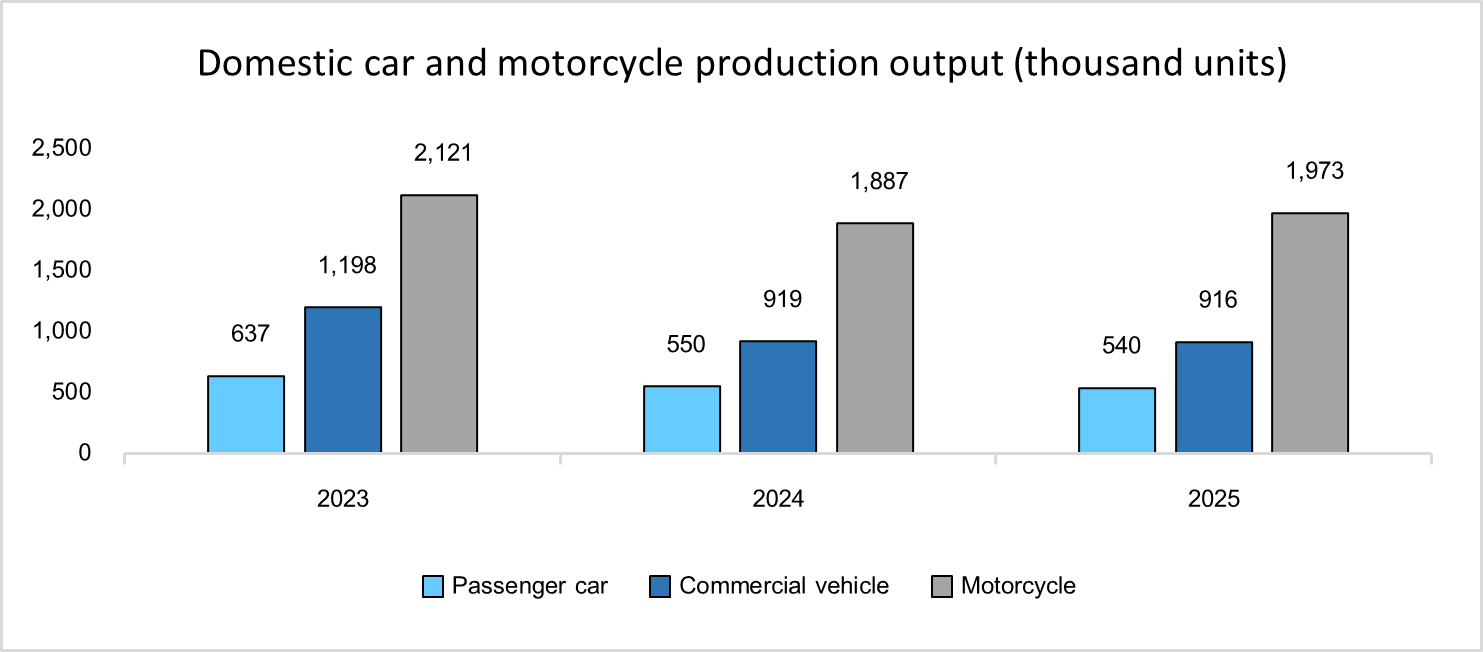
According to data from the Federation of Thai Industries, domestic automobile production in 2025 decreased slightly compared to 2024. Production of passenger cars declined by 1.81%, while commercial vehicle production decreased by 0.38%. Conversely, domestic motorcycle production increased by 4.54% from 2024.
b) Sales of cars and motorcycles
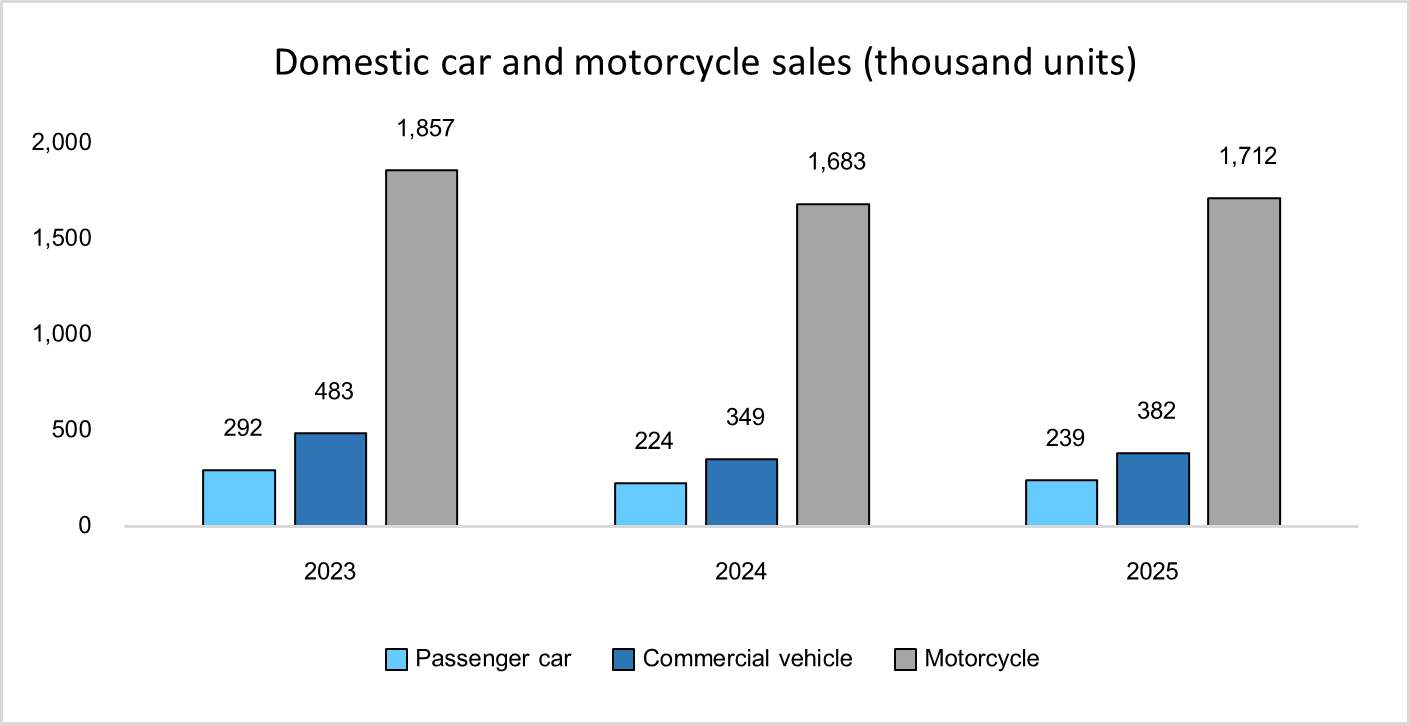
According to data from the Federation of Thai Industries, passenger car sales in 2025 increased by 6.73%, bolstered by intense competition in the electric vehicle (EV) market. Commercial vehicle sales rose by 9.58%, following the recovery of the business and export sectors, while motorcycle sales saw a slight increase of 1.70%. Overall, total automobile and motorcycle sales in 2025 grew compared to 2024, reflecting a recovery trend. However, the automotive industry continues to face significant risks that impact consumer purchasing power. These include a continuous decline in the Thai Business Sentiment Index due to concerns over the high cost of living and elevated household debt, stricter loan approval from financial institutions, and a decrease in income from agricultural exports.
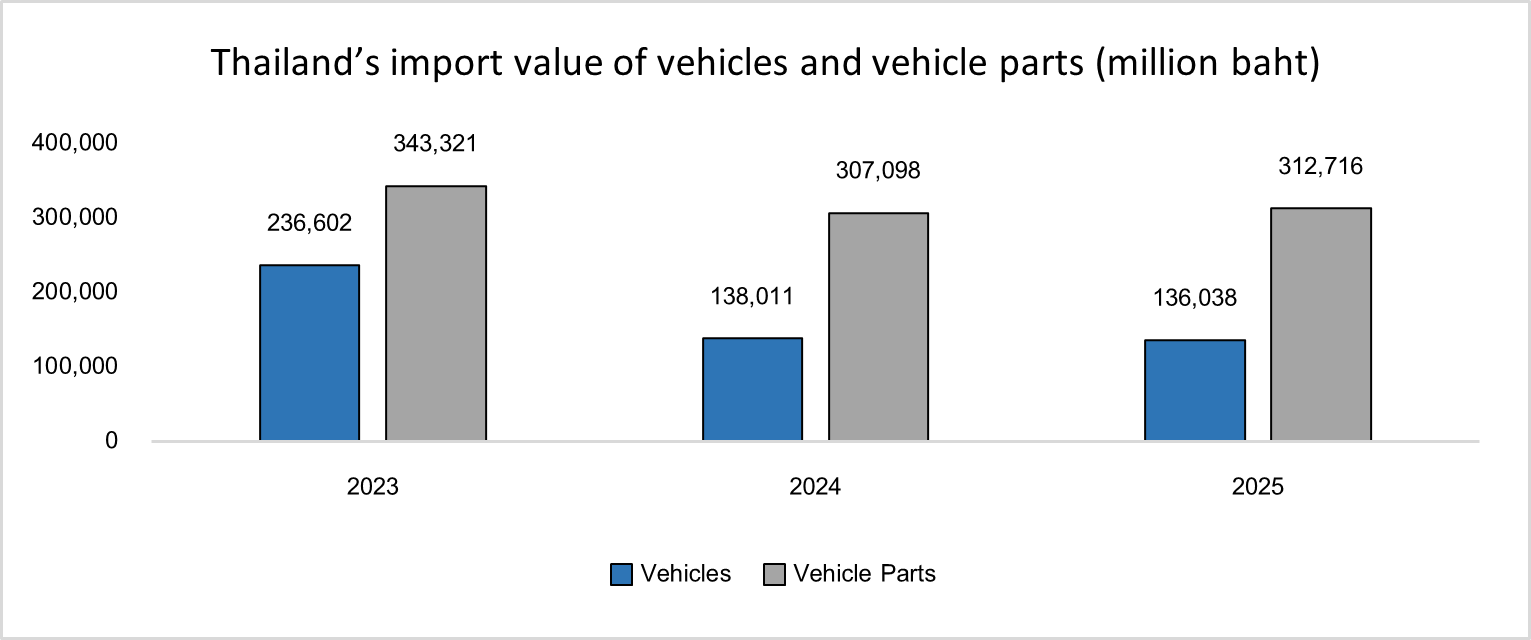
c) Vehicle and vehicle parts imports
According to data from the Customs Department (processed by the Bank of Thailand), the import value of vehicles in 2025 decreased compared to 2024, with vehicle imports declining by 1.43%, while the import value of automotive parts increased by 1.83%.
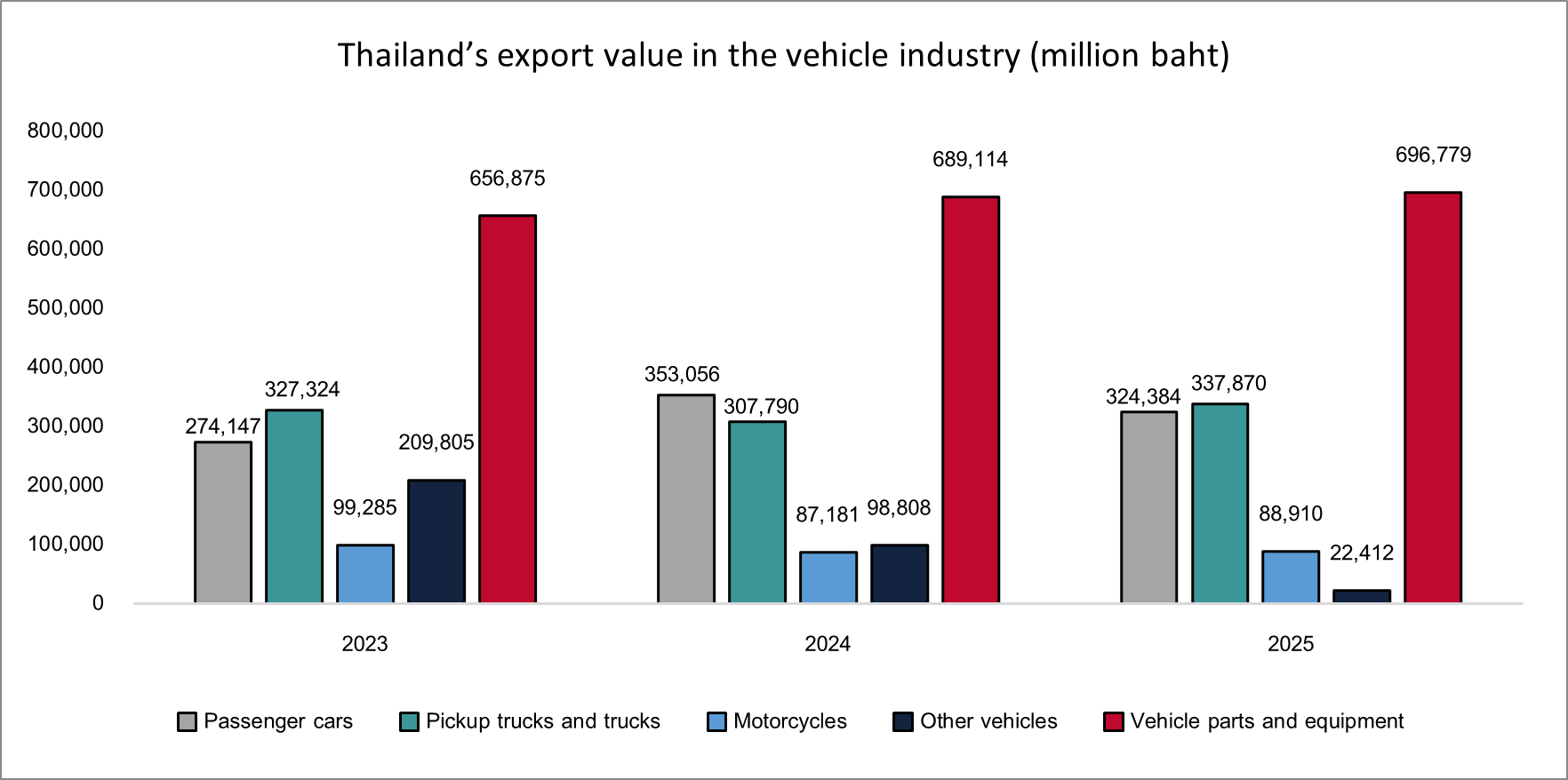
d) Vehicle and vehicle parts exports
According to data from the Customs Department (processed by the Bank of Thailand), the export value of Thailand's automotive industry in 2025 decreased by 4.27% compared to 2024. The passenger cars and other vehicles experienced a significant decline due to the discontinuation of certain passenger car models for export. Meanwhile, exports of pickup trucks, trucks, motorcycles, and automotive parts continued to increase.
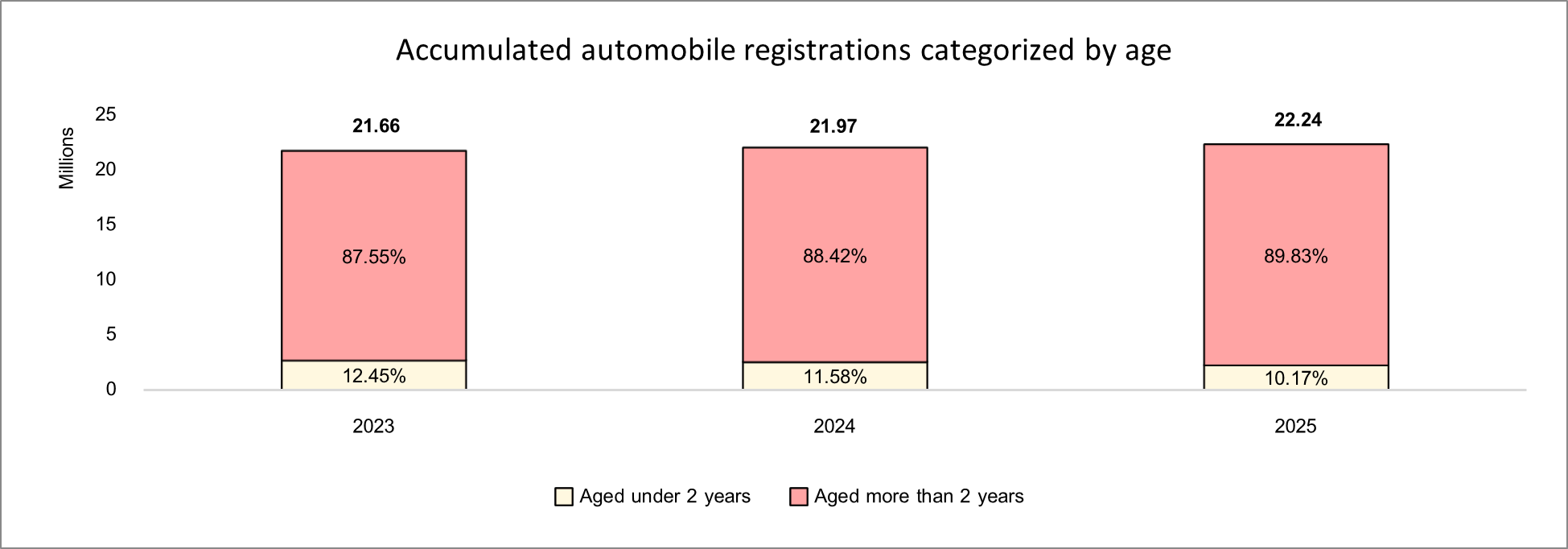
e) Accumulated vehicle registrations categorized by age: Data from the Department of Land Transport indicates that in 2025, there were a total of 22.24 million accumulated automobile registrations. The proportion of automobiles aged more than 2 years increased to 89.83%, while the proportion of automobiles aged under 2 years decreased to 10.17%.
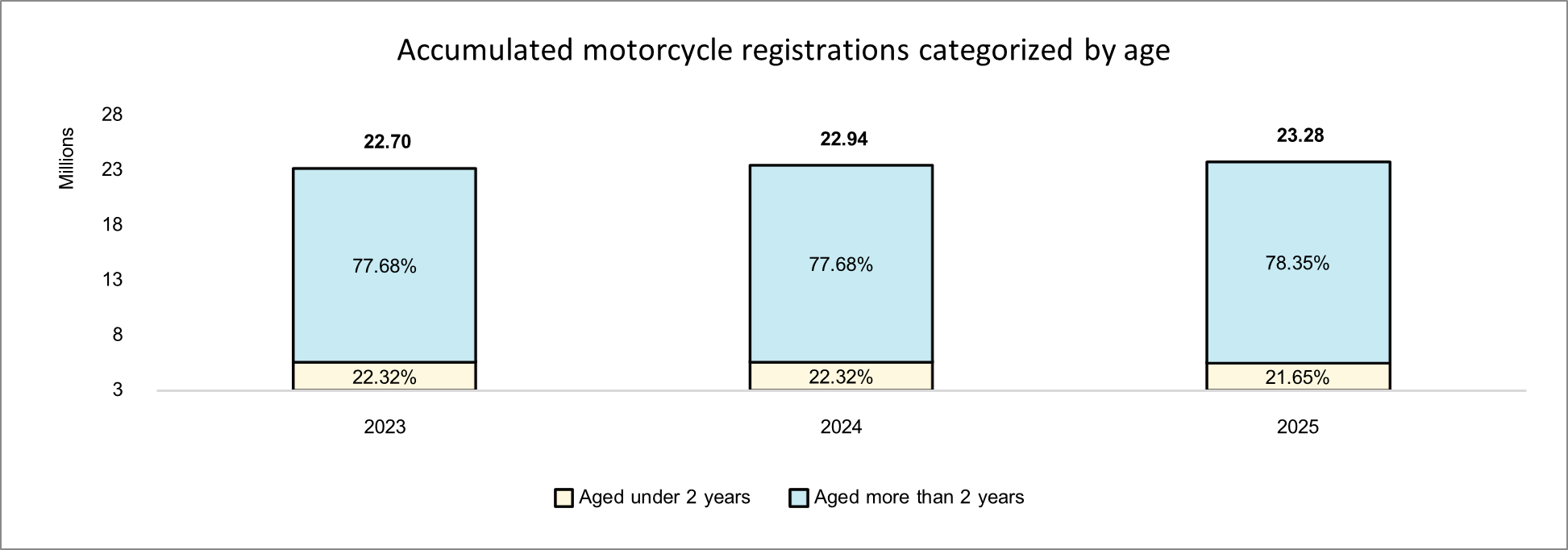
The total number of accumulated motorcycle registrations in 2025 increased to 23.28 million. The proportion of motorcycles aged more than 2 years increased to 78.35%, while the proportion of motorcycles aged under 2 years decreased to 21.65%.
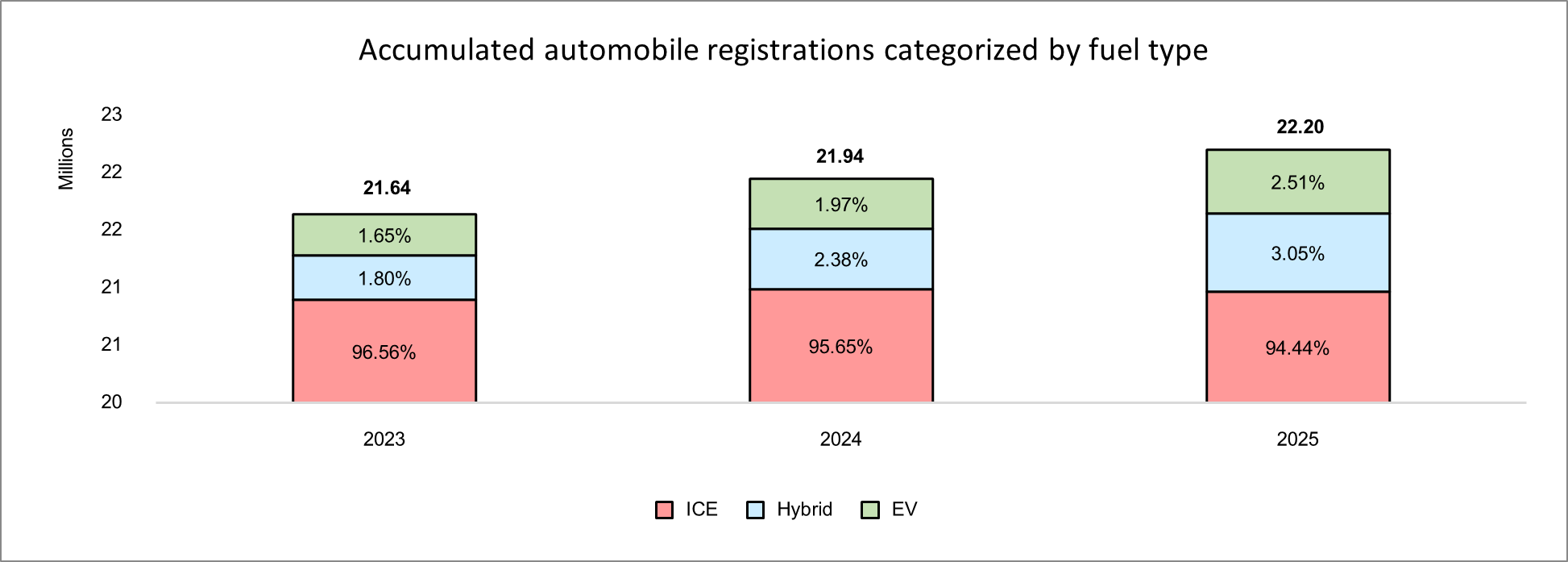
f) Accumulated Vehicle Registrations Categorized by Fuel Type: Data from the Department of Land Transport indicates that in 2025, there were a total of 22.20 million accumulated automobile registrations, excluding vehicles for which the fuel type could not be identified. The proportion of Internal Combustion Engine (ICE) automobiles decreased to 94.44%, while the proportions of hybrid and electric automobiles increased to 3.05% and 2.51%, respectively.
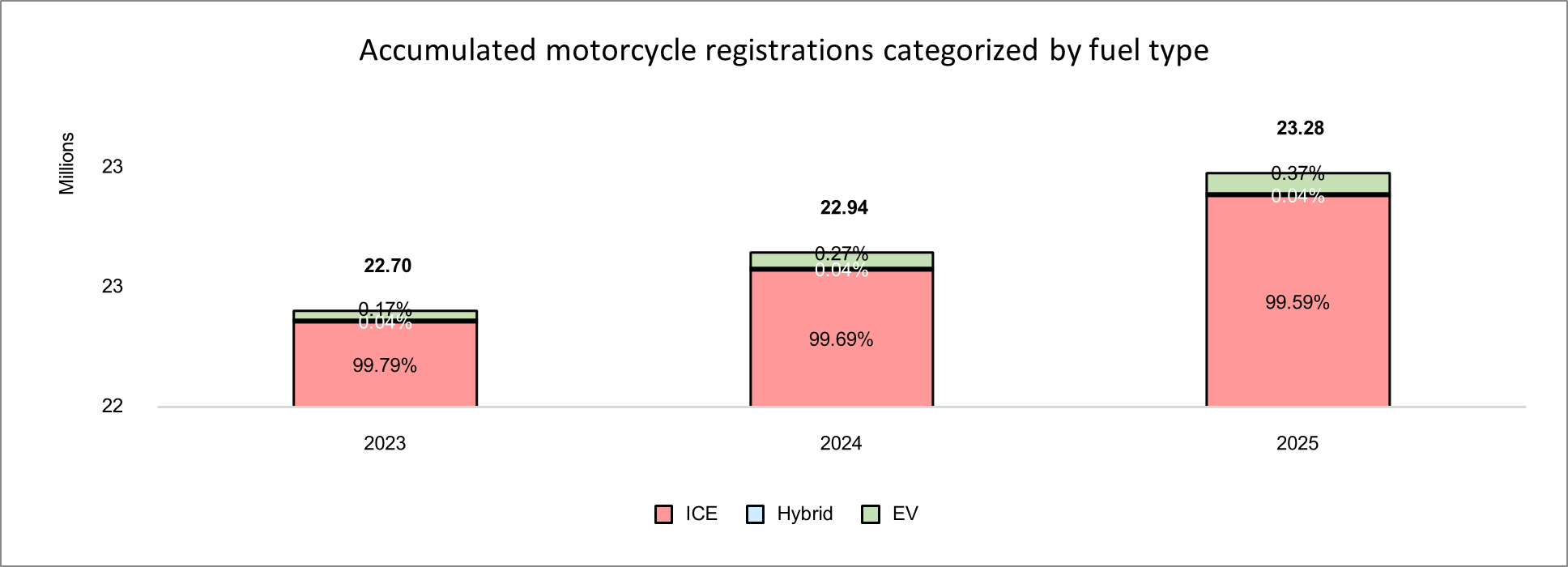
The total number of accumulated motorcycle registrations in 2025 stood at 23.28 million. This comprised a 99.59% share of Internal Combustion Engine (ICE) motorcycles, while the proportion of hybrid motorcycles remained stable at 0.04%, and the proportion of electric motorcycles increased to 0.37%.
The Battery Industry
Based on data regarding the production, domestic sales, and exports of automobile and motorcycle batteries from large manufacturing plants provided by the Office of Industrial Economics (OIE) for 2025 compared to 2024, it was found that production in 2025 decreased by 2.96%, consistent with the decline in domestic automobile production. Domestic sales saw a slight increase of 0.81%, reflecting relatively stable demand from domestic consumers. Meanwhile, exports in 2025 grew significantly by 17.80% as battery manufacturers expanded their export markets to meet international demand and compensate for the domestic market. However, the domestic battery industry continues to face challenges in aligning strategies and technologies with the transition to the electric vehicle (EV) industry, as well as intensified competition from Chinese battery manufacturers.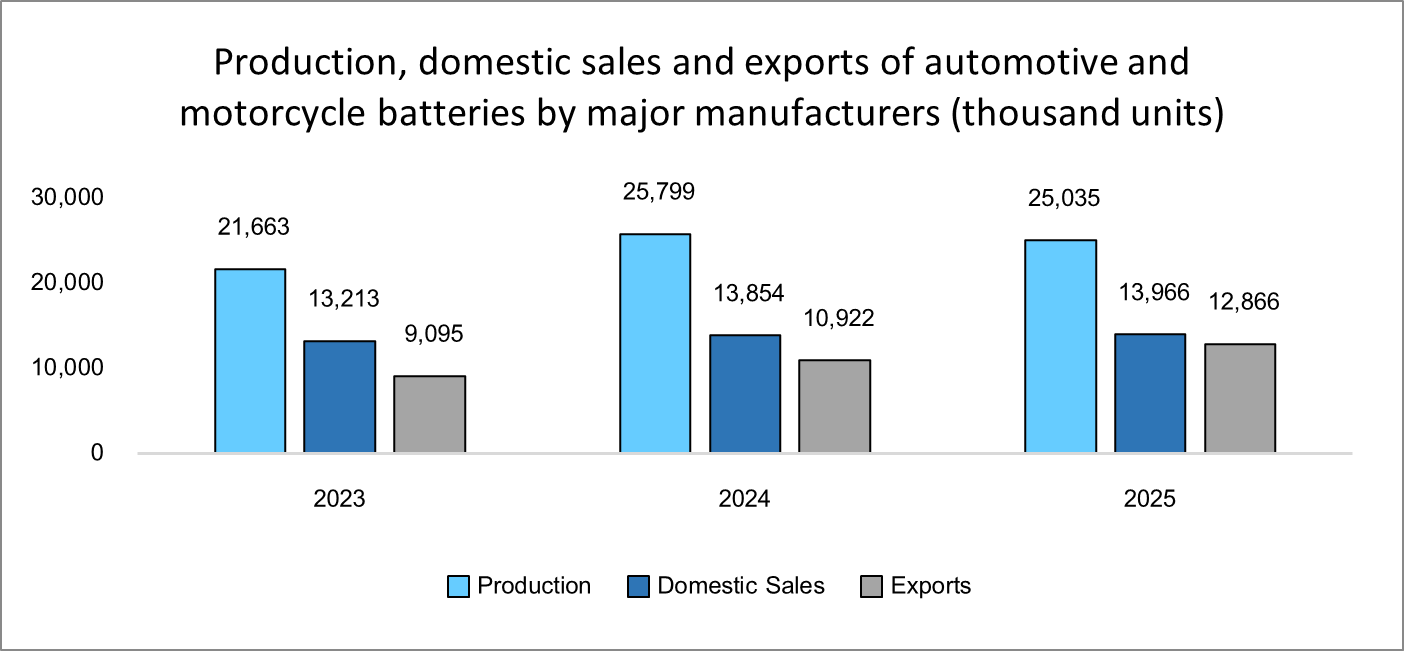
Marketing and Competition
Overview of battery manufacturers in Thailand: Most of battery manufacturers in Thailand are joint ventures formed between foreign entities (Japanese) and Thai manufacturers. They are facilitated with technology transfer from the joint venture firm. Such formation also benefits battery manufacturers in terms of relationship with Japanese automakers. Battery manufacturing in Thailand is mostly comprised of the production of automotive and motorcycle batteries, which are standard batteries. However, the production of industrial batteries, which work as backup power sources for factories, office buildings, and computer equipment has increased. There is also the production of electric vehicle (EV) batteries. At present, the government has continuously issued a variety of incentive measures for investors as well as consumers. This resulted in an increasing demand for this type of batteries, to which the trend continues to thrive. It is projected that in the near future, apart from the investments from automakers — whose productions are for their respective brands — the incentives will attract more battery manufacturers to invest in Thailand.
Competition in the Battery Market
a) The Domestic Market
(1) The Original Equipment Market (OEM): Competition in the OEM market is intense, especially in the automotive sector, where numerous battery manufacturers compete mainly on price, resulting in relatively low profit margins. In contrast, competition in the OEM motorcycle battery market is less fierce due to fewer manufacturers, allowing for better profit margins.
Siam GS Battery Co., Ltd. is a leader in the OEM automotive battery market, while Yuasa Battery (Thailand) Public Co., Ltd. holds the largest market share in the motorcycle battery segment. Although profits in the OEM market of the Company are not high, it remains important for battery manufacturers due to its continuous demand and the brand recognition generated by installing batteries in new vehicles.
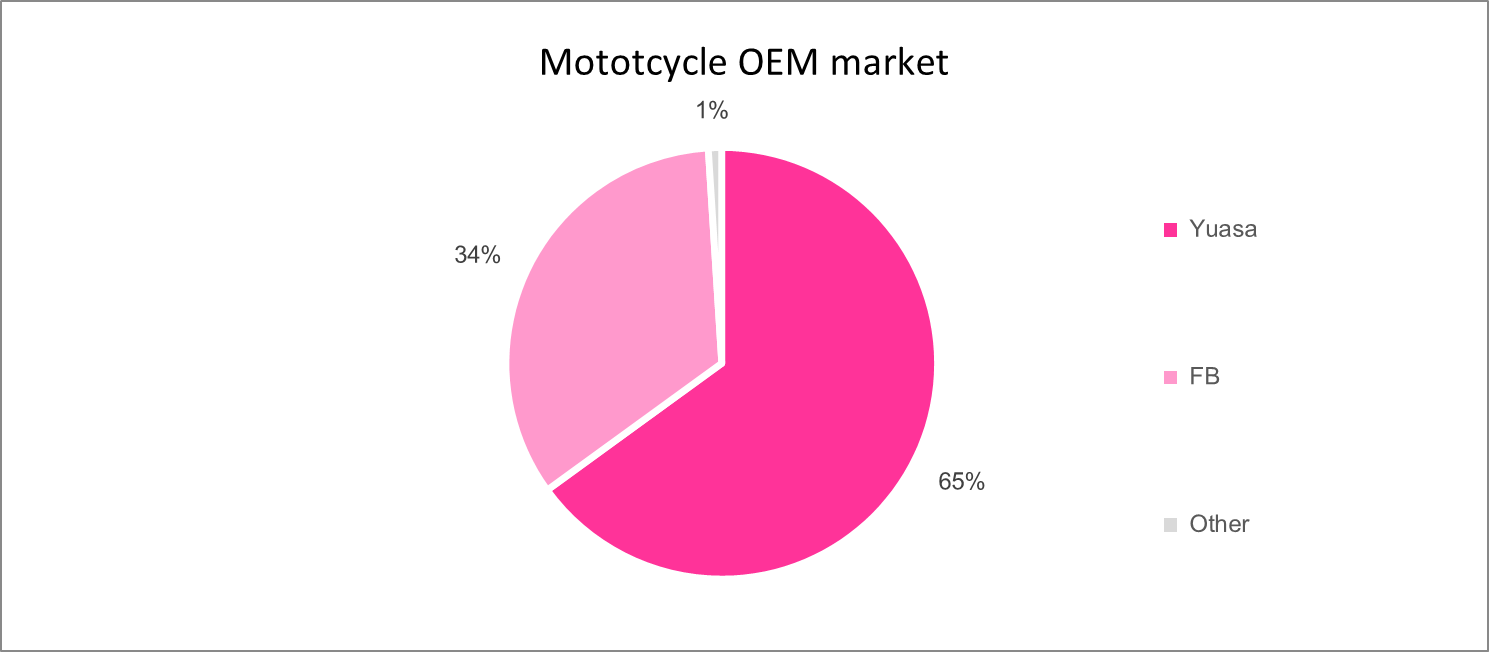
In 2025, Yuasa Battery held around 65% of the motorcycle OEM battery market share. Despite the lower profit margins compared to other markets, this sector is still significant due to its steady demand and its role in promoting products. The Company is currently focused on expanding its market share by attracting new customers, particularly new motorcycle manufacturers in the country, while maintaining strong relationships with existing customers through various collaborations. The Company’s key customers include motorcycle manufacturers such as Honda, Yamaha, and Kawasaki.
Source: The Sale Department, Yuasa Battery (Thailand) PLC
(2) Replacement Equipment Market (REM): This market is the primary profit source for battery manufacturers and is highly competitive. It is divided into two segments: the government sector, which uses a bidding system for procurement, and the private sector, which also experiences intense competition. While advanced technology is not essential for current battery production, the key differentiator lies in maintaining quality standards. Therefore, manufacturers must continuously improve production techniques to ensure quality and control costs.
For Yuasa Battery, in 2025, the Company held 5.9% of the automotive battery REM market share and 19.6% of the motorcycle battery REM market share. The sales network includes dealers, service centres, modern trade outlets such as B-Quik, and government agencies. The Company places significant emphasis on all sales channels and is the exclusive distributor for B-Quik, supporting promotional activities and battery check-up services.
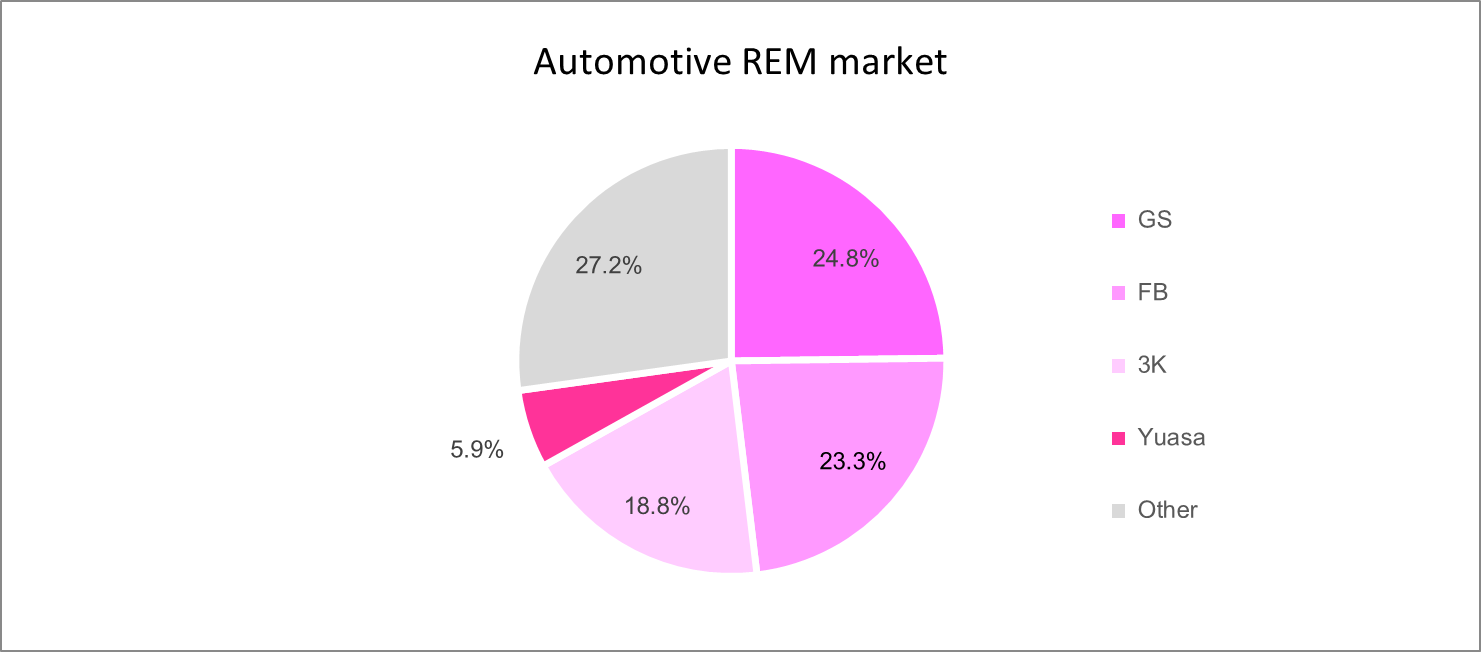
Source: The Sale Department, Yuasa Battery (Thailand) PLC
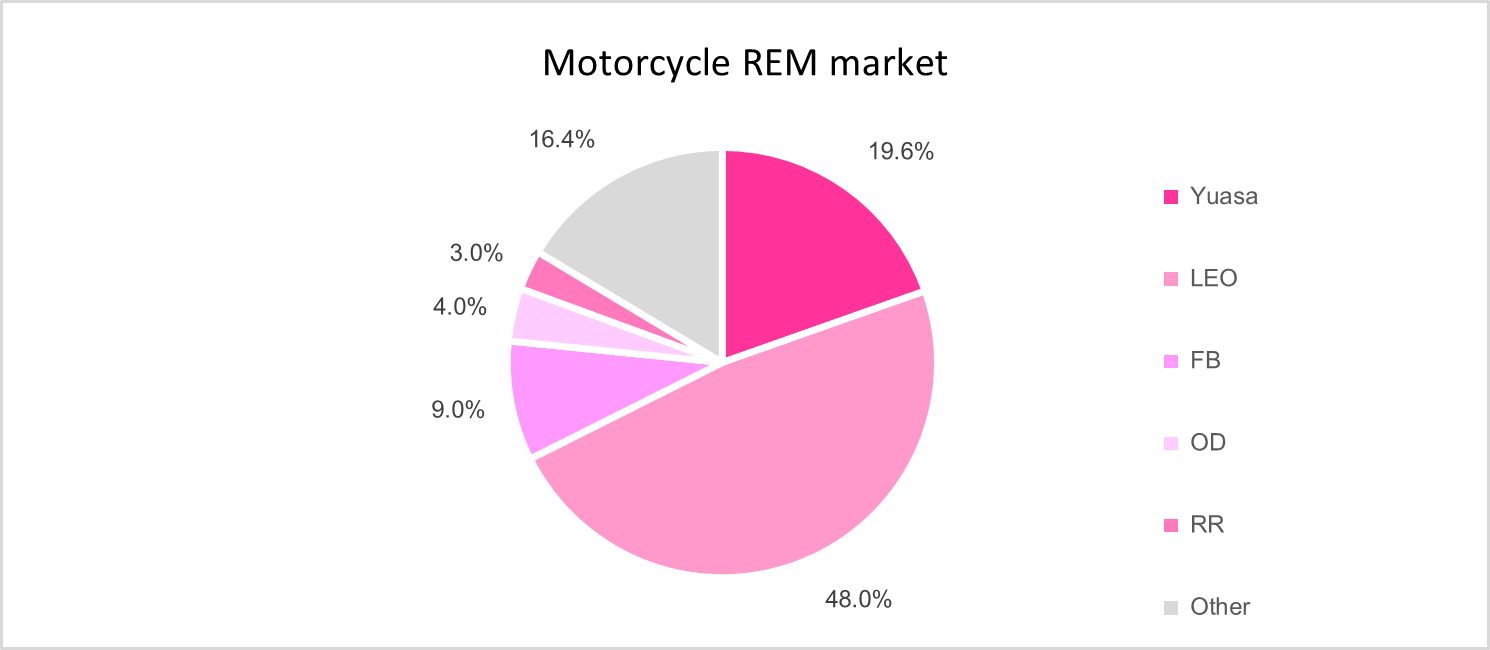
Source: The Sale Department, Yuasa Battery (Thailand) PLC
b) The Export Market
Competition in the export market is shaped by regional manufacturers who enjoy cost advantages due to lower production costs. Improving cost efficiency remains a key factor in maintaining global competitiveness. Additionally, when adjusting export prices, fluctuations in raw material prices, such as lead, and exchange rates must be carefully considered, as these factors directly impact product pricing and profit margins. Therefore, manufacturers must continuously focus on improving production capacity to achieve optimal costs, which is a crucial strategy for enhancing competitive capabilities.
For Yuasa Battery, in 2025, international sales accounted for 19.98% of total battery sales revenue, with key customers in the Philippines, Malaysia, and Italy.
Domestic/Export Sales Ratio (Overall)
| Country | Ratio (%) |
|---|---|
| Thailand | 78.16 |
| Malaysia | 3.49 |
| Pakistan | 1.78 |
| Italy | 2.18 |
| Philippines | 10.42 |
Procurement of Products & Services
Reporting Mode
3117
Procurement (Overall)
In 2025, the Company has an estimated annual production capacity of approximately 600,000 automotive batteries and 4,400,000 motorcycle batteries. Compared to the previous year, the actual battery production in 2025 increased by 10.9% for motorcycle batteries and decreased by 5.4% for automotive batteries. The Company has aligned its battery production with sales demand. Additionally, the Company has increased imports of batteries from affiliated companies for domestic market distribution.
Raw Material Acquisition (Overall)
Raw material procurement policy: The Company's overall raw material purchase policy focuses on good and long-lasting relationship with the suppliers, especially the shared benefits of both the Company and the suppliers. This allows the Company to maintain good relationship with the suppliers. In terms of essential raw materials, the Company has procurement policy as follows: -
a) Lead (Pure Lead / Antimony Alloy / Calcium Alloy): Currently, the company has annual contracts with suppliers, calculating the monthly purchase volume based on production requirements aligned with the business plan for the year. The price is based on the average market price (Commodity Price) from the London Metal Exchange (LME), calculated as the average price for the month, minus the delivery month price, plus the Premium negotiated and bid before the contract, as well as delivery costs, customs clearance fees, and a 7% VAT.
The company will only purchase or contract with suppliers listed in its approved supplier list to ensure the product quality and specifications are met. This will be verified through laboratory testing and mass production testing, with results meeting the company's standards. Once the lead is ordered, the company stores it in its internal warehouse for 45-60 days.
b) Plastic and Rubber Containers: The company has a total of five suppliers—four for plastic containers and lids and one for rubber containers and lids—all based in Thailand. The prices for plastic and rubber containers, including lids, depend on the material cost each month. Orders align with monthly sales forecasts, and the company keeps a reserve stock to support production for approximately 1 - 1.5 months.
c) Separators: For AMB, the company has three suppliers in Thailand, all leading specialists in battery separators, providing products to all battery manufacturers in Thailand and exporting some. For MCB, the company works with two suppliers from China. Battery separators are custom-made - each supplier must produce based on specific customer requirements - because separators directly impact battery quality, performance, and shelf life. The price remains fairly stable, and as separators are low-cost items, making it unfeasible for the company to produce them in-house. The company typically keeps raw material stock for 30-45 days.
d) Sulfuric Acid: Currently, the Company has two suppliers in Thailand. An additional supplier was recently onboarded to mitigate the risk of over-reliance on a single source. This new supplier is currently undergoing a stringent quality control period to ensure their production and delivery meet the Company’s standards. During this trial phase, deliveries from the new supplier are limited to only two days per month. To maintain the required quality of sulfuric acid, supplies from both providers must undergo laboratory testing for impurities—conducted by both the suppliers and the Company—prior to storage for production use. Furthermore, sulfuric acid prices remain relatively stable, as the cost of its primary raw material, Sulfur, is consistent.
Production Policy (Overall)
Produce-for-sale policy: In terms of overall production output, the Company prioritizes manufacturing and distributing to OEM customers as it is stated in the agreement between the Company and the manufacturers. The remainders from sales in the OEM market will then be distributed to the domestic REM market and export market; all of which are done under standardized production quality control. The Company intends to keep the product's proprietary rights confidential. In addition, the Company has a policy to manufacture products under other trademarks with improvement in the cost of production, which will allow the products to compete in the market. However, if there is a period in which the Company is unable to manufacture products as needed or the price is not competitive against competitors, the Company will import products from affiliated companies to compensate the production deficit or to be able to compete in the market.
Distributors (Overall)
• Pure Lead: There are 4 suppliers, including companies from Thailand, Switzerland, and India, who have been working with the company for 5 to 10 years.
• Antimony Lead Alloy: There are 2 suppliers, all based in Thailand, who have been working with the company for over 15 years.
• Calcium Lead Alloy: There are 2 suppliers, one from Thailand and the other from India, who have been working with the company for 7 to 15 years.
• Plastic and Rubber Containers: There are 5 suppliers, consisting of 4 suppliers of plastic containers and 1 supplier of rubber containers, all based in Thailand, who have been working with the company for over 20 years.
• Separators: For automotive batteries, there are 3 suppliers, all based in Thailand, and for motorcycle batteries, there are 2 suppliers from China, who have been working with the company for over 20 years.
• Sulfuric Acid: There are currently 2 suppliers in Thailand capable of meeting the Company’s standards and specifications. The first has been a partner for over 20 years, while the second is a new supplier currently under stringent quality control.
Number of Raw-Material Distributors (Overall)
19
Production Capacity (Overall)
| Item | Unit | Unit (if Other) | Used | Capacity |
|---|---|---|---|---|
| Automotive batteries | Others | Pieces | 69.63 | 600,000 |
| Motorcycle batteries | Others | Pieces | 95.95 | 4,400,000 |
Domestic/Overseas Purchase Proportion (Overall)
| Raw Material | Source Country | Value |
|---|---|---|
| Pure lead | Thailand | 250,738,145.02 |
| Pure lead | Switzerland | 110,173,853.44 |
| Pure lead | India | 48,341,043.33 |
| Pure lead | South Korea | 7,521,438.58 |
| Antimony Lead Alloy | Thailand | 126,356,732.79 |
| Calcium Lead Alloy | Thailand | 272,446,435.64 |
| Calcium Lead Alloy | India | 113,385,048.06 |
| Plastic and Rubber Containers | Thailand | 132,835,624.55 |
| Separators | Thailand | 37,133,728.31 |
| Separators | Japan | 21,090,955.69 |
| Separators | China | 3,792,354.05 |
| Sulfuric Acid | Thailand | 9,841,588 |
Nature of Business — Overview
Introduction
Yuasa Battery Thailand Public Company Limited is a Thai-Japanese joint venture which has been facilitated with technology transfer from GS Yuasa International Ltd., Japan (GYIN). The Company is a manufacturer of automobile batteries, motorcycle batteries, truck batteries, agricultural vehicle batteries, fishing boat batteries and other types of batteries for both local and foreign distributions. In addition, the Company is an importer of batteries manufactured with advanced technologies facilitated by the joint venture and “YUASA” affiliated firms.
The Company has been operating for 60 years under the trademark "YUASA", a trademark of a Japanese joint venture company. In addition, Company manufactures and sells the batteries under its private brands, e.g., “THUNDERLITE” and “YUCON.” The Company pays royalty fees to GS Yuasa International Ltd. (GYIN). The royalty fees are calculated by units of production for conventional batteries and by percentage of sales for maintenance-free batteries. Furthermore, the Company also imports the batteries under the trademark “YUASA” from subsidiaries of a joint venture company, from which the Company has to pay royalty fees calculated based on the percentage of sales as well. For sales in foreign markets apart from the territories of Thailand, Laos, Cambodia, and Myanmar, if the Company wishes to distribute the products under the trademark "YUASA", it must get an approval from the joint venture. Generally, the joint venture provides assistant in seeking export markets. The joint venture may either purchase the entire lot of the products from the Company or charge a commission for selling. In terms of sales of the products within the Company’s territory or sales under other trademarks, the Company is allowed to independently distribute the products. The methods of distribution other than these will be carried out by the Company itself.
Projects Under Construction
Has Projects Under Construction (Y/N)
No
Debentures & Bills of Exchange
Has Debentures (Y/N)
No
Convertible Securities
Has Convertible Securities (Y/N)
No